The retrofitting team was running a high-variation automotive workflow through paper, spreadsheets, and knowledge spread across departments. Creating the process for a new build could take months. Importing work orders took days and still depended on an external service provider.
One digital flow from import to release
We mapped the existing process and designed the future workflow from Škoda data import through execution, release, and billing. The result is a digital workbook built around the operator’s next action rather than the structure of the source systems.
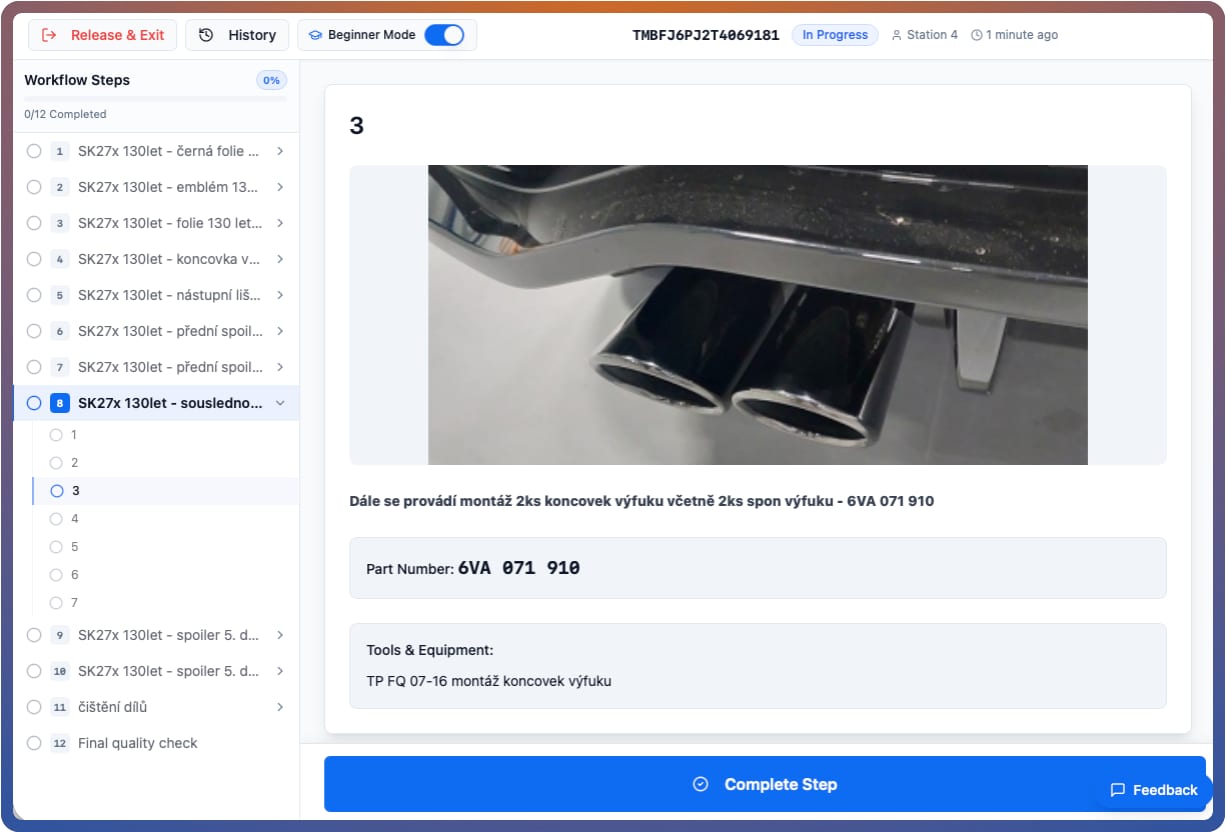
Each vehicle opens into a guided sequence of work instructions. Steps can include reference imagery, part numbers, tools, and equipment. Beginner mode makes unfamiliar processes easier to follow, while experienced operators can move through established work without unnecessary friction.
Traceability without more administration
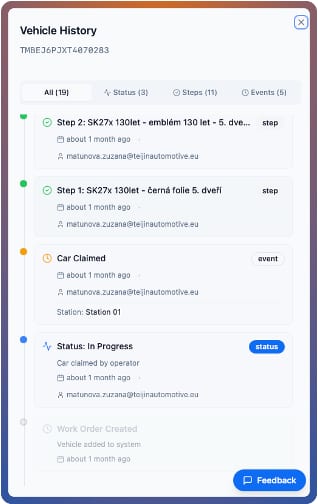
The system records when every step starts and completes, who claimed the vehicle, the station involved, and the status changes around the work. That history is available as one vehicle record instead of paper stored in several departments.
Reusable styling modules mean a new retrofitting variant can build on an established process rather than starting again. Operational KPIs—including cycle time, station utilisation, process efficiency, and rework—come from the same execution data instead of a parallel reporting exercise.
The result
- 240 minutes of manual, paper-based processing removed each working day;
- approximately €30,000 in annual savings;
- complete vehicle and process traceability;
- faster setup for new retrofitting workflows;
- a working interface designed for both operators and management.
The strongest outcome is not paper converted into a screen. It is a process that is easier to execute, teach, inspect, and improve from the same reliable record.