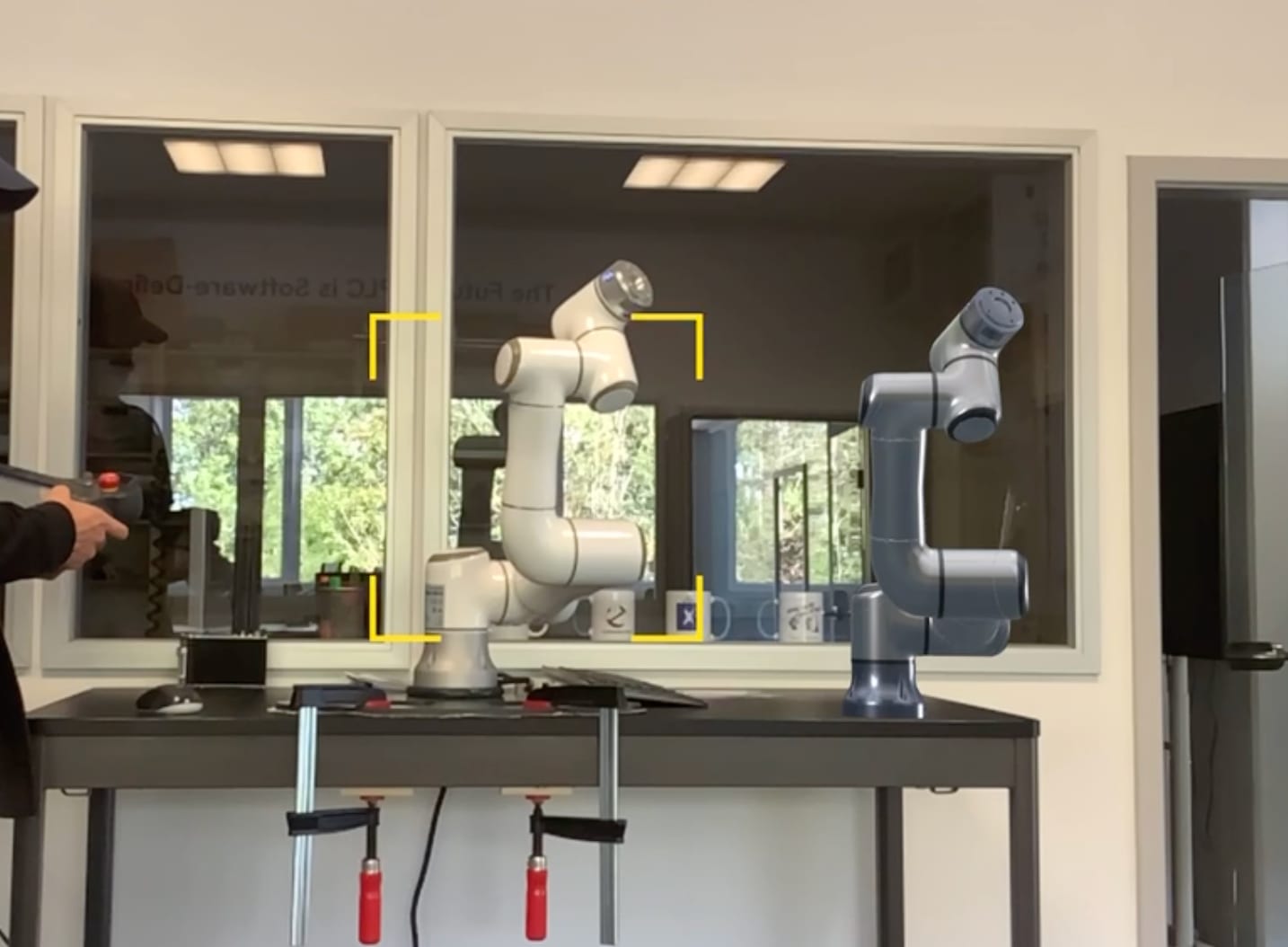
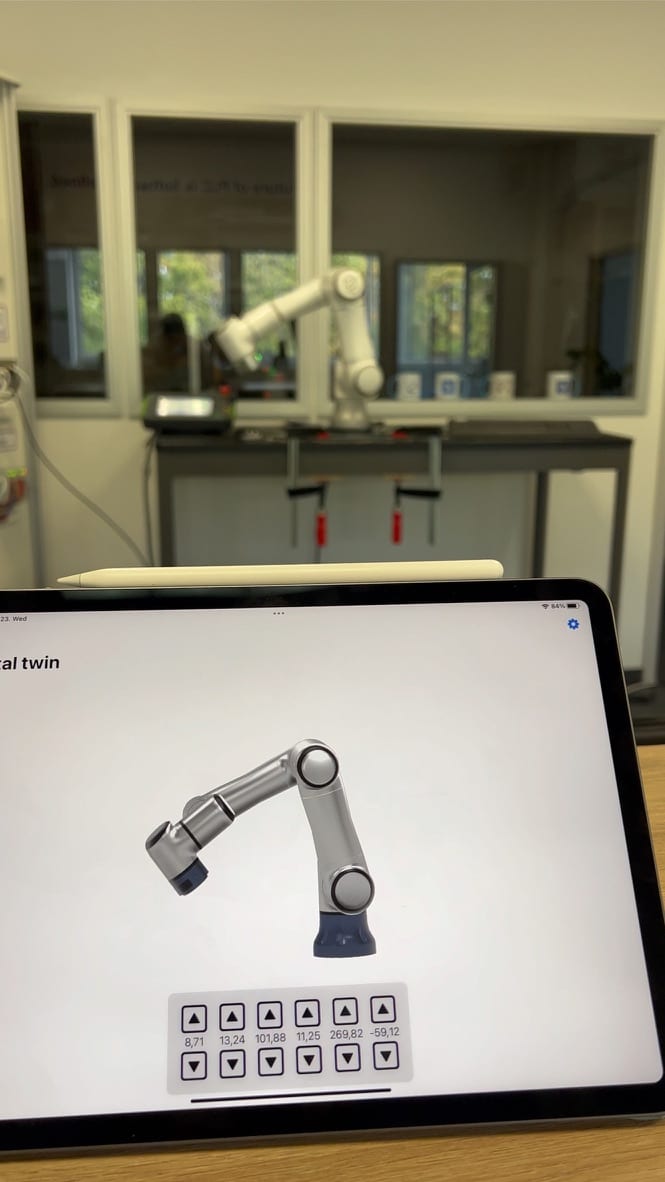
This project was not an animation of a robot cell. The virtual pose had to follow real joint state closely enough for somebody away from the equipment to use it during diagnostics and controlled operation.
Live state needs a clear meaning
The interface distinguishes observed state from a commanded or simulated state. Without that distinction, a convincing 3D view can create false confidence about what the physical machine is doing.
Joint telemetry, coordinate frames, calibration, and timing all affect whether the representation can be trusted. A small inconsistency may look harmless on screen while pointing an investigation in the wrong direction.
Work the twin supports
- remote state inspection when an engineer cannot stand at the cell;
- replay and diagnosis of movement or positioning issues;
- operator training without using the production asset for every exercise;
- testing a proposed motion in a controlled mode;
- AR-assisted views that put digital state beside physical equipment.
The safety boundary remains outside the visual layer. The interface can make state and intent understandable, but robot controllers and the operating environment retain responsibility for allowed motion and intervention.
The published case study concentrates on the interface and mapping problem. Details tied to a specific cell, controller, or customer environment are intentionally not included.